
A Diocese Listening
How Community Voices Shaped a Mission
How Community Voices Shaped a Mission
When Bishop Daniel Felton was appointed to the Diocese of Duluth in 2021, he stepped into a community eager for connection, healing and renewed direction. Rather than beginning his service with assumptions or predetermined approaches, Bishop Felton chose a different path — one built on genuine listening and understanding.
When Bishop Daniel Felton was appointed to the Diocese of Duluth in 2021, he stepped into a community eager for connection, healing and renewed direction. Rather than beginning his service with assumptions or predetermined approaches, Bishop Felton chose a different path — one built on genuine listening and understanding.
Inspired both by the diocesan response to the global Synod process and by his desire to understand the people entrusted to his care, he initiated a series of diocesan-wide listening sessions. These gatherings would become the foundation of a Mission Implementation strategy shaped not from the top down but from the lives and experiences of the people themselves.
Before the sessions began, representatives from the diocese’s five deaneries met in November 2021 to prepare. Led by Andrew Jarocki, who worked closely with the bishop to coordinate and compile the results, the group laid the groundwork for an approach that ensured every deanery, parish, and voice had the opportunity to be heard. Representatives were nominated from each deanery, including Angie Gadacz from the Brainerd Deanery, chosen by Father Michael Garry for her willingness to step forward and serve.
Angie and the other representatives returned to their respective deaneries to guide the process locally. They organized events with Bishop Felton to explain the mission of the listening sessions and invited additional parishes and community organizations to host gatherings of their own. The goal was inclusivity — creating as many opportunities as possible for individuals to share their experiences and hopes for the Church.
In Brainerd alone, Angie facilitated three sessions at St. Francis, while St. Andrew’s and St. Mathias expanded the effort by holding sessions for parishioners, faith formation students and high schoolers. Across the deanery, Angie frequently volunteered to assist other parishes, ensuring local voices were supported and encouraged. Similar efforts took place throughout the diocese, ultimately amounting to nearly 50 listening sessions overall.
Participants from these local sessions were then invited to attend the larger deanery-level gatherings. Online submissions were also made available to guarantee that no one was left without a way to speak their truths.
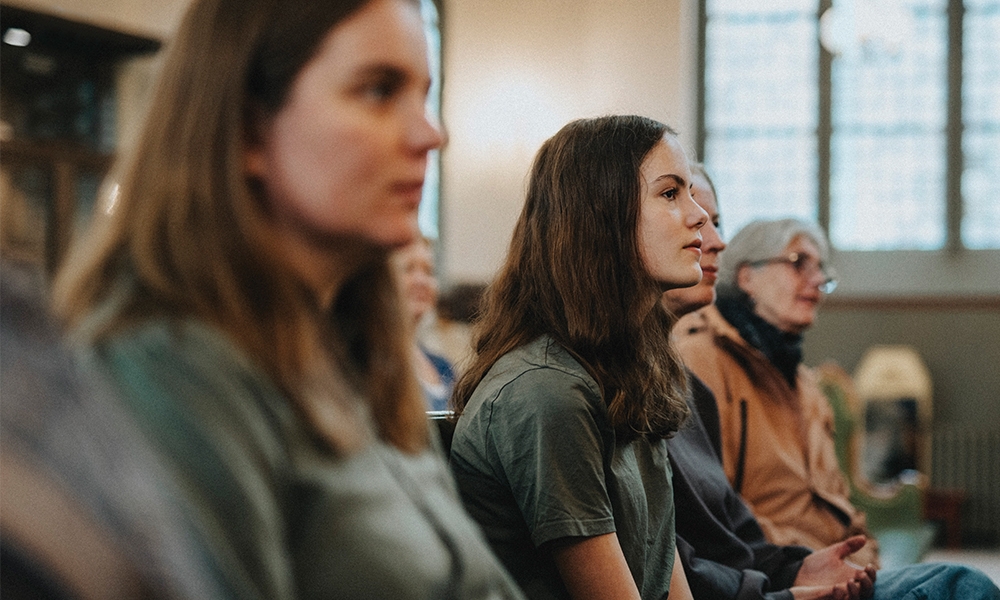
In February 2022, deanery listening sessions were held across the diocese, including one in the Brainerd Deanery that welcomed about 110 participants. At each gathering, Bishop Felton opened with a message explaining the purpose of the sessions and the hopes guiding them. The meetings then moved into a time of Lectio Divina centered on the Gospel story of the road to Emmaus — a fitting theme, as the bishop’s vision for the diocese emphasized walking with Jesus and encountering Him in one another. Participants were invited to reflect on Jesus as the source of healing, hope, joy and abundance.
This prayerful foundation created a Christ-centered atmosphere of respect and openness. As Angie described, it helped “get everyone into the mentality of listening to each other in Christ.”
From there, participants reflected on several guiding questions. They identified areas of pain or hurt in their parishes, their communities and in their own lives. They wrote down their thoughts, later sharing them aloud if they felt called to do so. No debate or rebuttal was allowed — these sessions were designed strictly for listening, not argument. The goal was one of unity, vulnerability and understanding.
During this time, many expressed deep sorrow over young people leaving the Church, as well as lingering hurts and frustrations caused by the COVID-19 pandemic. Others shared deeply personal experiences of loss, divorce or longing — expressions that spoke to the real need for healing across the diocese.”
Afterward, the process shifted as participants were invited to reflect on what gave them hope and what brought them joy. These insights, along with their earlier reflections on pain and healing, were gathered and brought forward to the deanery meetings.
Once every deanery completed the process, the feedback was compiled into a single diocesan report. Drawing from the voices of the people, Bishop Felton issued his pastoral letter outlining a mission implementation vision grounded in the themes of healing, hope, joy and the abundant life found in Jesus.
What began as an effort to understand a diverse diocese became a transformative journey of solidarity and renewed mission.”
Closing Reflection
The listening sessions revealed that when a community comes together to speak honestly and listen with a posture of attentiveness, the Holy Spirit moves. What began as an effort to understand the needs of a diverse and widespread diocese became a transformative journey of solidarity, vulnerability and renewed mission. Bishop Felton’s pastoral letter, Mission Core Values and Mission Implementation strategy stand as the Church’s response to the concerns, dreams and faith shared by its people. In many ways, the sessions were more than just meetings — they were moments of encounter, reminders that in walking together, listening together and seeking Jesus together, the Diocese of Duluth can continue to grow as a community rooted in healing, strengthened by hope, alive with joy and ready for the abundant future God has planned.